Tesofensine
Appetite regulation, increased satiety and metabolic support.
Research context
🧠 Tesofensine (500 mcg)
Overview
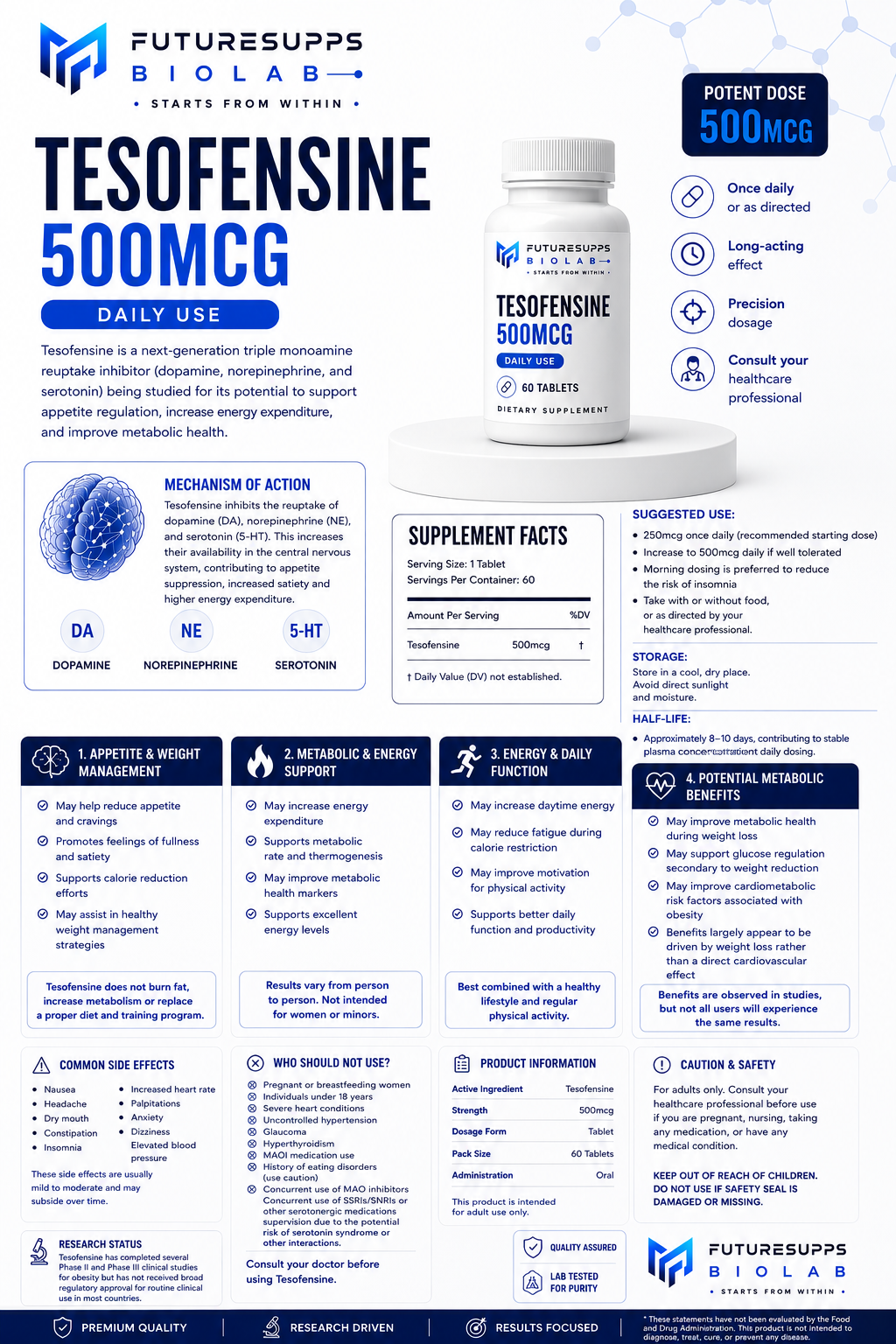
Tesofensine is a triple monoamine reuptake inhibitor that increases dopamine, norepinephrine and serotonin activity in the brain. It is primarily studied for its potential to support appetite control, energy expenditure and weight management.
Potential Benefits
🔥 May reduce appetite and food cravings
⚖️ Promotes feelings of fullness (satiety)
📉 Supports healthy weight management
⚡ May increase energy expenditure
💪 Helps support metabolic health during weight loss
🏃 May improve motivation for physical activity
How It Works
Tesofensine increases the availability of dopamine, norepinephrine and serotonin in the brain. This may help reduce hunger, improve satiety and increase calorie expenditure.
Suggested Use
250 mcg once daily (recommended starting dose)
Increase to 500 mcg once daily if well tolerated
Take in the morning to reduce the risk of insomnia
Can be taken with or without food
Common Side Effects
Most side effects are mild and may improve as the body adapts.
Dry mouth
Nausea
Headache
Constipation
Difficulty sleeping
Increased heart rate
Mild dizziness
Who Should Avoid It
Tesofensine may not be suitable for individuals with:
Pregnancy or breastfeeding
Uncontrolled high blood pressure
Significant heart disease
Glaucoma
Use of MAO inhibitors or certain antidepressants without medical supervision
Storage
Store in a cool, dry place.
Keep away from heat, moisture and direct sunlight.
Research Status
Tesofensine has been studied in human clinical trials for obesity and weight management. Although results are promising, it has not received widespread regulatory approval for routine clinical use in most countries.
💡 Quick Summary
Tesofensine is an investigational weight management compound that may help reduce appetite, increase fullness and support calorie expenditure. Best results are achieved when combined with a nutritious diet, regular exercise and healthy lifestyle habits.
Tesofensine poster